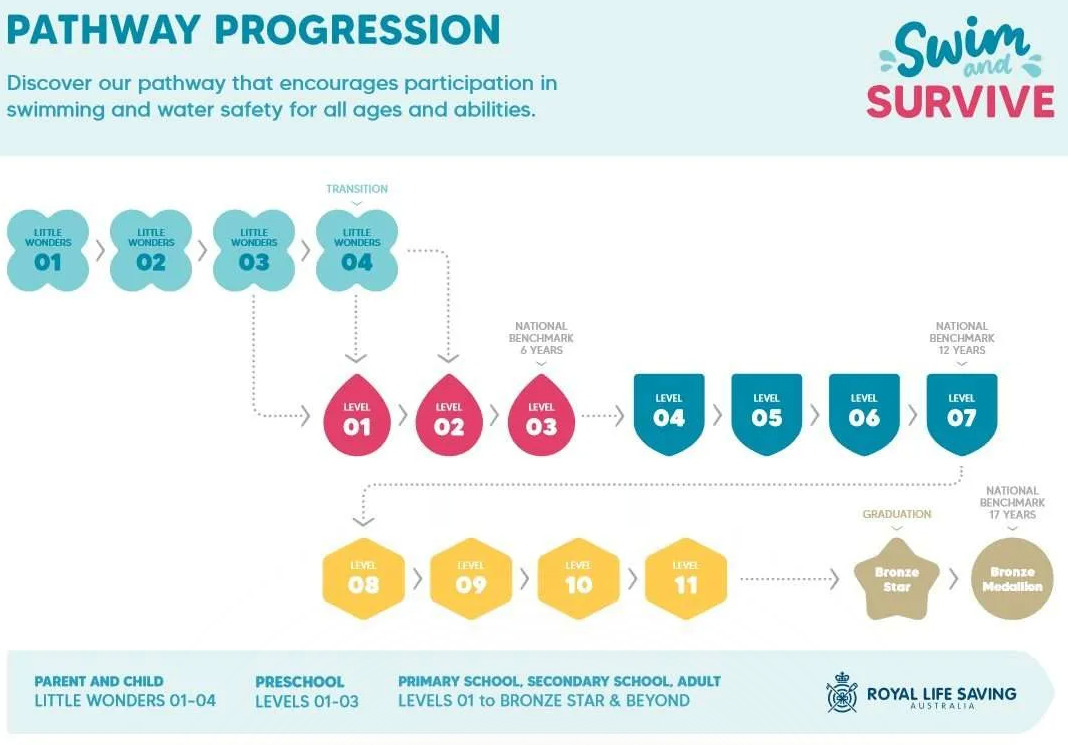
Royal Life Saving's Swim and Survive program ensures children all over Australia get the very best swimming and water safety education backed by over 125 years of experience in swimming and lifesaving, based on evidence-based research.
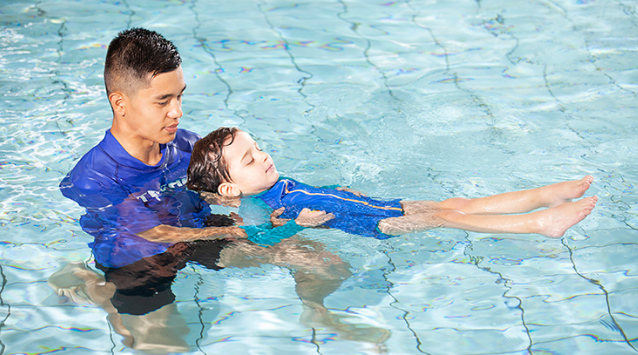
Join our pool of over 450,000 Swim and Survive kids to develop the next generation of safer, confident and competent swimmers. Swim and Survive is a fun and dynamic swimming and watersafety program that focuses on the development of swimming, personal survival, basic rescue and lifesaving skills. Swim and Survive aims to provide individuals with the required skills to lead safe and active lives in, on and around water. No matter the level of experience, Swim and Survive is inclusive for everyone at any ability to learn these essential skills. The comprehensive and balancedcurriculum will guide learning through progressive steps, providing an opportunity to grasp the fundamental skills through to advancing to more challenging skills increasing in endurance andcomplexity.
Backed by 125 years of Royal Life Saving history
Well-researched and reviewed regularly to keep it up to date
Aligned to the National Swimming and Water Safety Framework
The best avenue to achieve the National Benchmarks for swimming and water safety
GST-free as it meets the criteria of personal aquatic survival skills
Above all, fun, challenging and a channel for personal achievement
Continuing to participate in swimming and lifesaving is essential to keep our young Australians safe in and around water.
All Australians at the age of 17 years should be able to:
Understand behaviours that affect personal safety in aquatic environments and activities
Assist others to exit deep water using bystanders
Float, scull or tread water for 5 minutes and signal for help
Swim continuously for 400 metres
Search in a deep water environment and recover a person
Respond to an emergency and provide first aid
Rescue an unconscious person in deep water
Perform a survival sequence wearing heavy clothing